
London School of Sports Massage |
 |
Learning Experience
It takes time to develop the practical skills, confidence and knowledge needed to become a good therapist. With weekend workshops spaced approximately a month apart, learners have the opportunity to practise and consolidate their skills before returning to the classroom to learn more advanced techniques. Spending this length of time with a group of fellow learners and tutors also helps build supportive professional relationships and a shared learning experience.
Practical Skills Training
Every therapist is different, with their own strengths and weaknesses. A technique that works well for one person may not be the most suitable for another. LSSM tutors have many years, and often decades, of teaching and clinical experience, enabling them to give learners the individual guidance needed to develop techniques that work best for them.
LSSM provides all treatment couches, towels, cushions and lotions required for classroom training. Learners are expected to practise on each other, as it is important to both feel as well as deliver the techniques being taught.
Home Practice
Learners are required to complete a log of 50 hours’ practice treatments outside the classroom. Most begin by treating friends and family, who then recommend them to others, allowing confidence and experience to grow naturally. By the end of the course, learners have already started building an initial client base and are ready to begin professional practice.
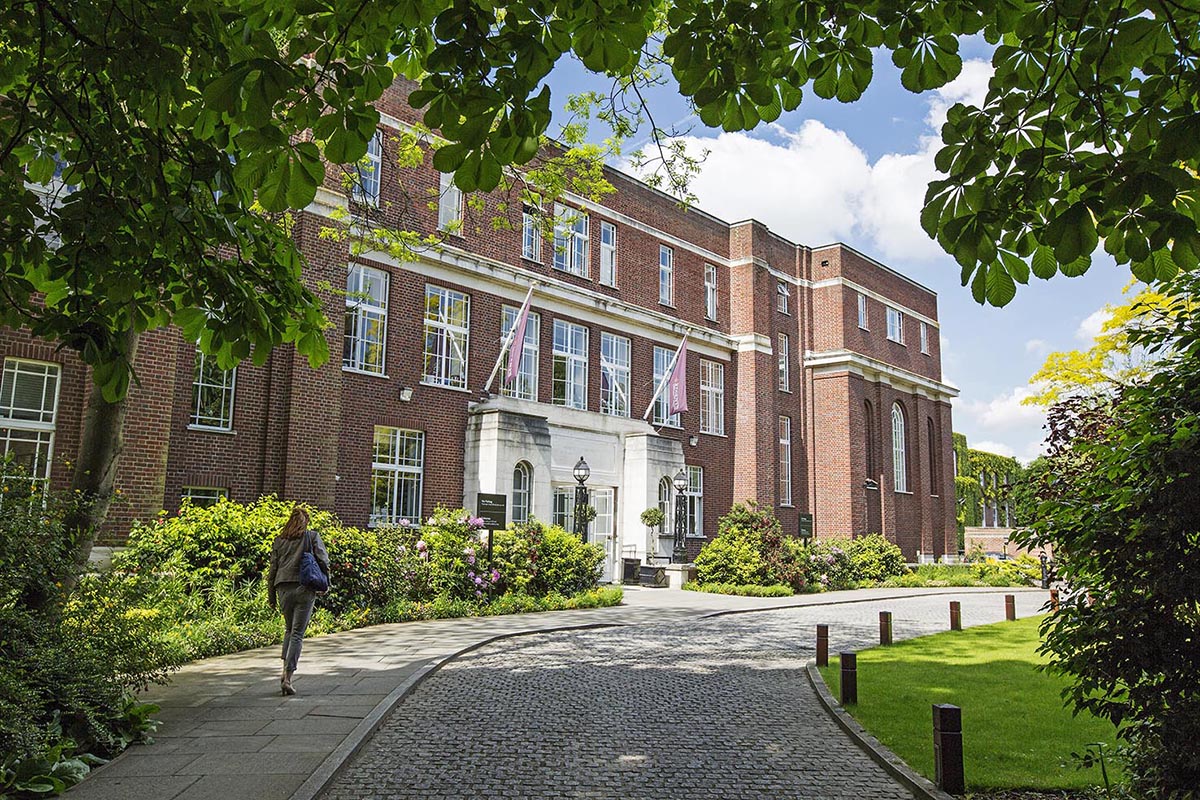
Our venue at Regent’s University in Regent’s Park, Central London, is exceptional.
Visit us: Tour the facilities, observe a class, meet our tutors and speak with current students. To book a free visit, contact: admin@lssm.com
Written Coursework
Although a good therapist requires substantial knowledge and understanding, this is primarily a practical, hands-on therapy qualification, so the coursework has not been made unnecessarily academic. Subjects are divided into shorter, structured questions that guide learners through the key topics.
We also encourage answers to be written “as if speaking to a client” rather than to an academic lecturer. For learners with language or writing difficulties we recommend using voice-to-text software.
Recommended submission dates are provided for coursework assignments, but additional time is allowed because the priority is producing good-quality answers rather than rushing to complete them.
Video Library
We have an extensive video library covering most aspects of the training programme. These videos are designed to support and reinforce classroom learning, not replace it.
Practical hands-on skills can only be developed through supervised practice with experienced tutors. The videos provide an excellent resource for revision and consolidation between classes.
Assessments
Assessment methods are designed to provide valid and reliable measures of learner competence and are aligned with Ofqual Level Descriptors.
Coursework assignments and case studies are delivered online through the STTQ portal and assessed by independent STTQ markers within a moderated quality assurance system to ensure consistency and fairness.
Learners who do not initially achieve a required pass mark are given the opportunity to improve and resubmit coursework, or retake tests, in order to achieve a better result. Reasonable adjustments can also be made for learners with additional needs or disabilities.
Assessment summary
Level 4 (L4)
3 x written coursework assignments
3 x short answer anatomy tests
2 x Case Studies
50 hours of logged practice treatments
1 x short answer written test
1 x Practical skills test
Level 5 (L5)
2 x written coursework assignments
3 x Case Studies
1 x Practical skills test
Certification
On successful completion of the training programme, graduated receive:
STTQ Level 4 Diploma in Sport and Remedial Clinical Massage.
and (if appropriate)
STTQ Level 5 (upgrade) Certificate in Soft Tissue Therapy
Qualification Content
The qualifications are made up of 6 Units for L4 and 3 Units for L5
Units are not taught separately; they are integrated into a developmental learning programme.
Level 4 Sport and Remedial Clinical Massage
Units 1-6
Unit 1: Anatomy, Physiology & Pathology for Soft Tisue Therapists
Learning Outcomes. This unit teaches the learner to understand:Unit 2: Sport and Remedial Massage Techniques
Learning Outcomes. This unit teaches the learner how to apply:Unit 3: Clinical Assessment for Sport and Remedial Clinical Massage.
Learning Outcomes. This unit teaches the learner how to:Unit 4: Sport and Remedial Clinical Treatments
Learning Outcomes. This unit teaches the learner how to:Unit 5: Rehabilitation
Learning Outcomes. This unit teaches the learner how to:Unit 6: Professional Business Practice
Learning Outcomes. This unit teaches the learner how to:
6.1 Operate a professional clinical practice
6.2Operate a business as a self-employed therapist
Level 5 Soft Tissue Therapy (upgrade)
Units 7-9
Unit 7: Clinical assessment of injury (part 2)
Learning Outcomes. This unit teaches the learner how to:Unit 8: Advanced treatment techniques
Learning Outcomes. This unit teaches the learner how to:Unit 9: Rehabilitation (part 2)
Learning Outcomes. This unit teaches the learner how to: